

When it comes to choosing tiles for your home, two popular options often come up in conversation: porcelain and ceramic. While both types have their benefits and drawbacks, many homeowners struggle to decide which one is right for them.
In this article, we'll dive into the world of tile durability, comparing porcelain and ceramic tiles to help you make an informed decision. We'll explore the key differences between these two types of tiles, examining their composition, manufacturing process, and performance in real-world settings.
What are Porcelain and Ceramic Tiles?
Before we get started, let's take a closer look at what these two types of tiles are made of. Both porcelain and ceramic tiles are created using clay and other minerals, which are then fired at high temperatures to achieve their desired hardness and durability.
Ceramic Tiles: These tiles are made from a mixture of clay, water, and other minerals like feldspar and quartz. The mixture is then shaped into the desired form and fired at a relatively low temperature (around 1000°C) to harden.
Porcelain Tiles: Porcelain tiles, on the other hand, are made from a specific type of clay called kaolin, which is combined with other minerals like feldspar and quartz. The mixture is then pressed into shape and fired at an even higher temperature (around 1250°C) to achieve its characteristic hardness.
Durability and Performance
When it comes to durability, porcelain tiles generally outperform ceramic tiles in several key areas:
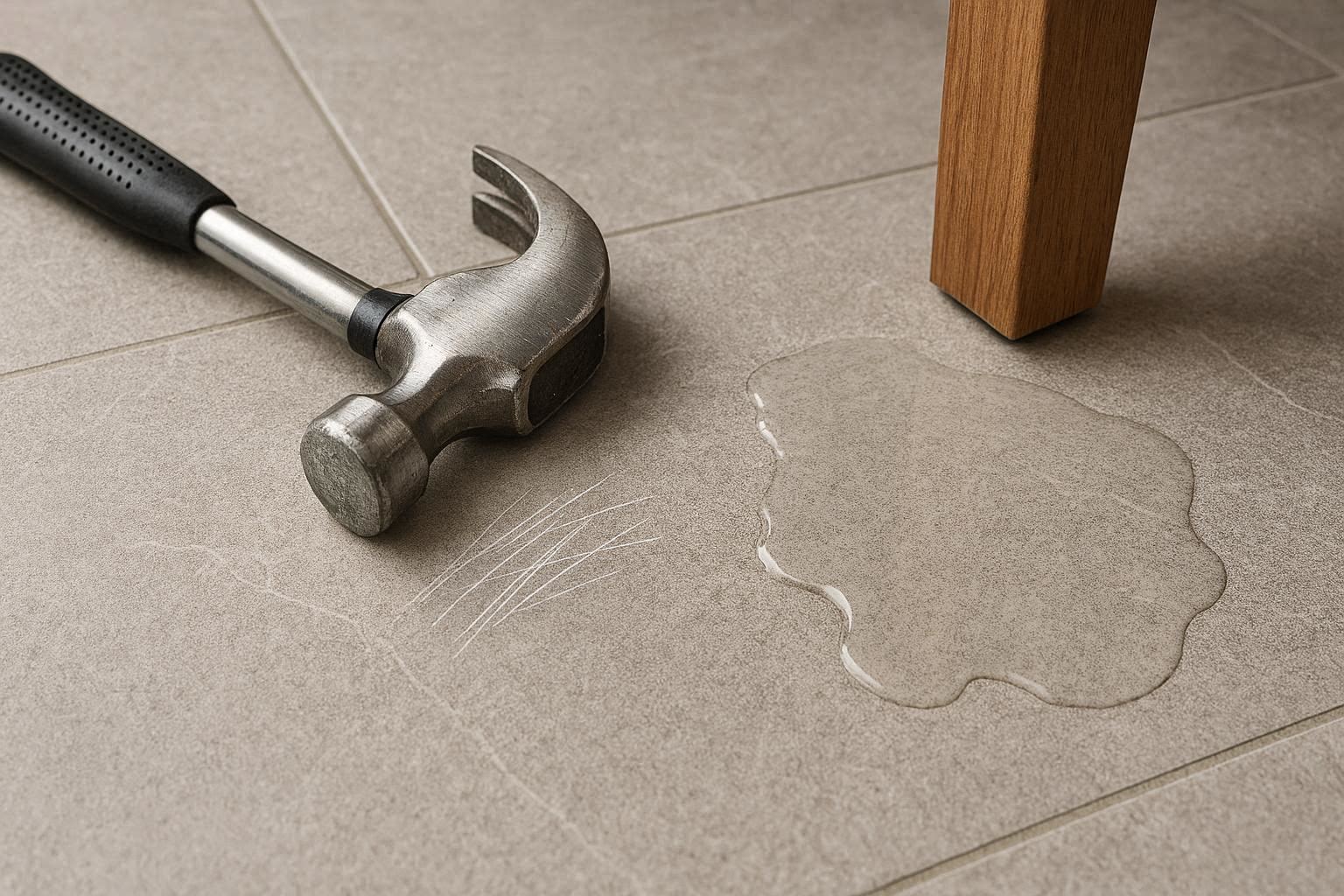
Water Resistance: Porcelain tiles are highly resistant to water damage, making them ideal for bathrooms, kitchens, and other areas prone to moisture.
Scratch Resistance: The high firing temperature used to manufacture porcelain tiles gives them an incredibly hard surface that resists scratches and scuffs.
Color Retention: Porcelain tiles tend to retain their color more effectively than ceramic tiles, which can become faded over time.
Porcelain tiles have several key benefits:
• Long-lasting: They can last for decades with proper care and maintenance. • Easy to clean: Their smooth surface makes them simple to wipe down and maintain. • Low maintenance: They resist stains and water damage, reducing the need for frequent repairs.
Ceramic tiles also have their own set of advantages:
• Cost-effective: Ceramic tiles are generally less expensive than porcelain tiles. • Variety of styles: Ceramic tiles come in a wide range of colors, patterns, and textures to suit any design aesthetic. • Easy installation: Their lighter weight makes them easier to install.
Comparing Performance in Real-World Settings
To put the durability claims to the test, let's examine some real-world examples:
Bathroom Showers: Porcelain tiles have been shown to withstand heavy water exposure and maintain their appearance over time. For instance, a study by Marazzi found that porcelain tiles retained 95% of their original color after being subjected to repeated cycles of immersion in water.
Kitchen Floors: Ceramic tiles are more prone to scratches and cracks under heavy foot traffic. However, they can still be an effective choice for kitchen floors if properly maintained.
Practical Tips for Choosing the Right Tile
When deciding between porcelain and ceramic tiles, consider the following factors:
• Traffic and usage: Porcelain tiles are ideal for high-traffic areas or spaces with heavy use. • Moisture levels: If you live in a humid climate or have a bathroom or kitchen that's prone to moisture, porcelain tiles might be a better choice.
Conclusion
Durability is just one aspect of choosing the perfect tile for your next project – don't forget to consider aesthetics, maintenance requirements, and budget when making your decision.
Top Porcelain Tile Examples for Modern Homes
Explore Porcelain Tiles at Smile Floors
Top Ceramic Tile Examples For Modern Homes
Explore Ceramic Tiles at Smile Floors
Sources:
Marazzi (2020). Porcelain Tile Performance Study.
The National Kitchen and Bath Association (NKBA) (2019). Tile Care and Maintenance Guide.
Tile Council of North America (TCNA) (2018). Ceramic and Porcelain Tile Handbook.