

Your Ultimate Guide to Top Kitchen Vinyl Flooring Choices
Hello there! Welcome to our comprehensive guide on selecting the perfect vinyl flooring for your kitchen. In this article, we'll take a closer look at different types of vinyl flooring, their benefits and potential downsides, and help you make an informed decision.
Why Vinyl Flooring in Your Kitchen?
Vinyl flooring is a popular choice for kitchens because of its durability, ease of maintenance, and water resistance. Let's dive into these advantages:
Durability: Vinyl flooring can handle heavy foot traffic without getting scratched or dented, making it an ideal option for busy kitchens.
Water Resistance: Kitchen spills and moisture are no match for vinyl flooring, which is designed to withstand these conditions without losing quality or appearance.
Ease of Maintenance: Vinyl floors require minimal effort to clean—just a damp mop and mild cleaner should do the trick!
Types of Vinyl Flooring for Kitchens
1. Luxury Vinyl Plank (LVP)
Luxury vinyl planks mimic the look of hardwood floors but offer greater durability and water resistance. They come in various widths, lengths, and designs, making them a versatile option for any kitchen.
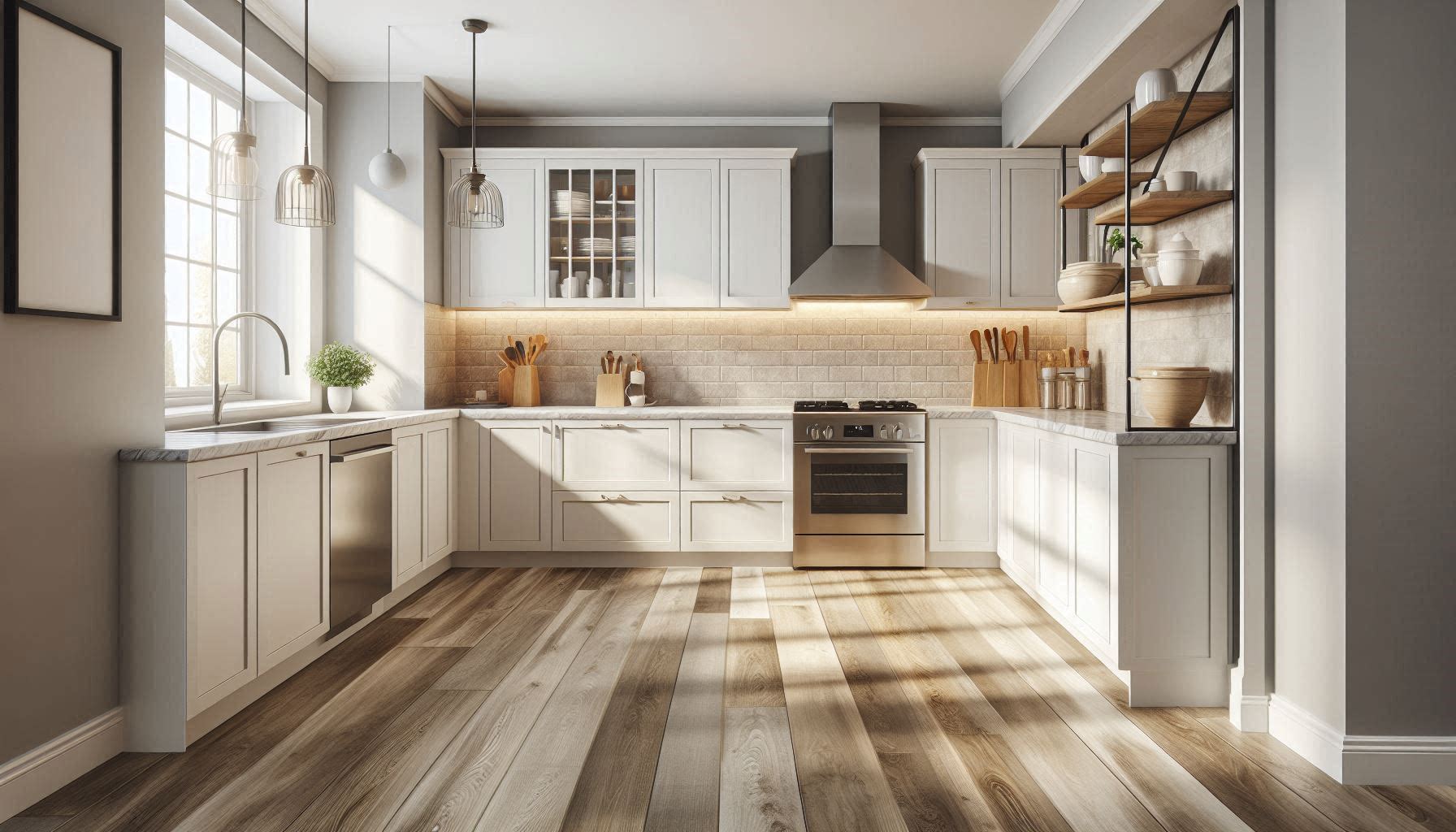
Benefits: LVP is scratch-, stain-, and moisture-resistant, easy to clean, and provides the visual appeal of hardwood floors.
Drawbacks: Although LVP may be more expensive initially, its durability makes it a cost-effective choice in the long run.
2. Luxury Vinyl Tile (LVT)
Luxury vinyl tile resembles natural stone or ceramic tiles but comes with added benefits like increased water resistance and improved comfort underfoot.
Benefits: LVT offers the visual appeal of stone or ceramic tiles without the associated drawbacks, such as coldness, brittleness, and high maintenance costs. Plus, it's easy to clean and maintain!
Drawbacks: Some premium LVT options can be pricier than other vinyl flooring choices.
3. Sheet Vinyl
Sheet vinyl is a single, continuous piece of vinyl that covers the entire floor. This type of vinyl flooring is available in various designs and patterns, making it great for achieving a cohesive look in your kitchen.
Benefits: Sheet vinyl is budget-friendly, easy to install, and offers a seamless appearance. It's also durable and water-resistant.
Drawbacks: Repairing or replacing sheet vinyl can be challenging since it's one continuous piece. Additionally, some designs may lack the detail found in LVP or LVT options.
Choosing the Right Vinyl Flooring for Your Kitchen
1. Establish your budget and prioritize your needs (durability, water resistance, aesthetic appeal). 2. Consult reviews and ratings from trustworthy sources. 3. Seek expert opinions and comparisons with other flooring types. 4. Visit showrooms or retailers to examine samples in person. 5. Consult a professional installer if needed for advice on selection and installation.
Conclusion
Investing in the right vinyl flooring for your kitchen not only elevates its aesthetic appeal but also ensures durability, ease of maintenance, and long-lasting quality. By considering the factors outlined in this guide, you can make a well-informed decision that suits your needs and preferences perfectly. Happy floor shopping!