

Understanding SPC and WPC Cores
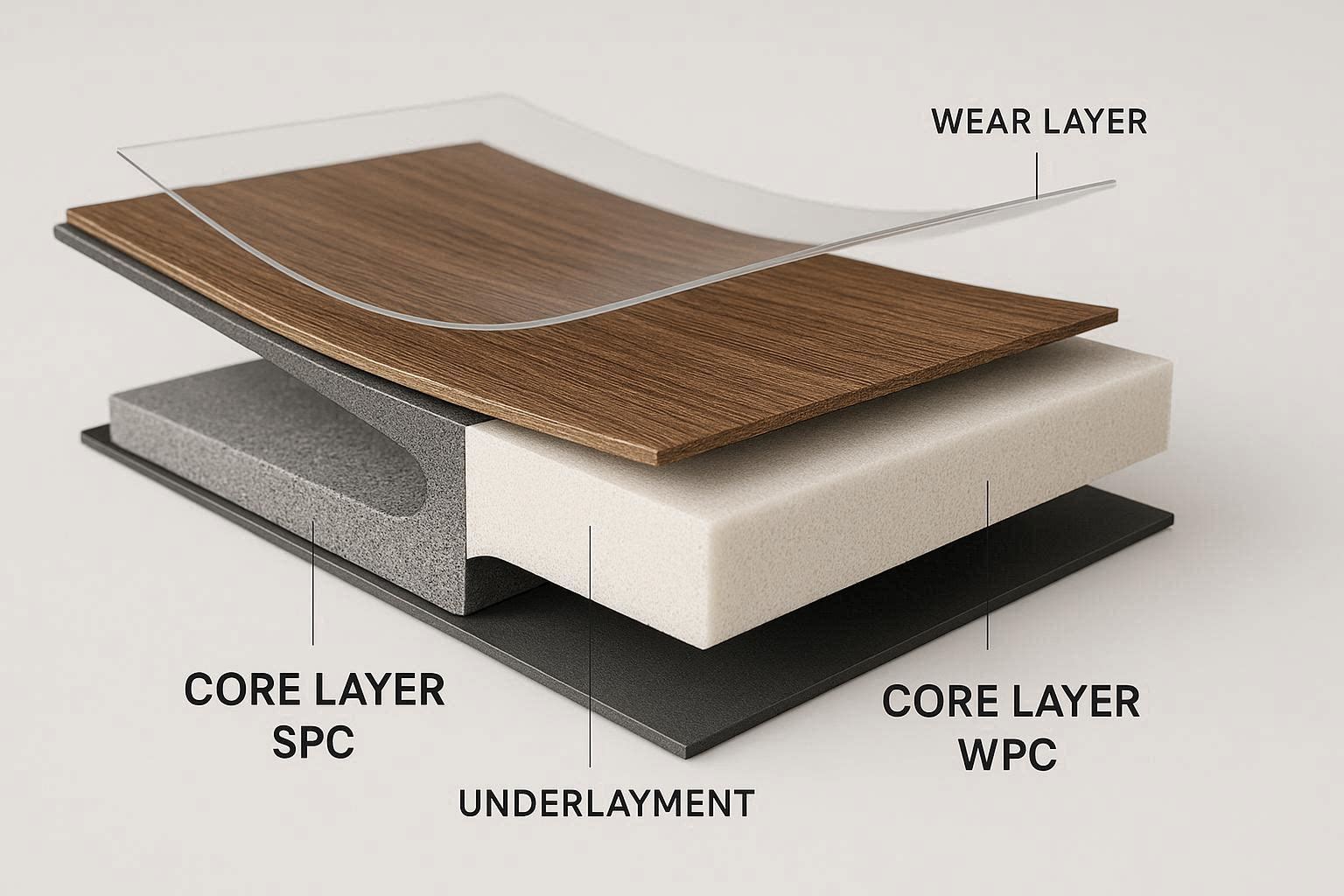
When shopping for luxury vinyl flooring, you will encounter two main core types: SPC (Stone Plastic Composite) and WPC (Wood Plastic Composite). Understanding the differences helps you make the right choice.
What is SPC Flooring?
SPC flooring features a rigid core made from limestone and PVC:
Composition: 60-70% limestone, 25-30% PVC, plasticizers
Thickness: Typically 3.5-7mm total
Density: Very dense and rigid
SPC Advantages
Extremely durable and dent-resistant
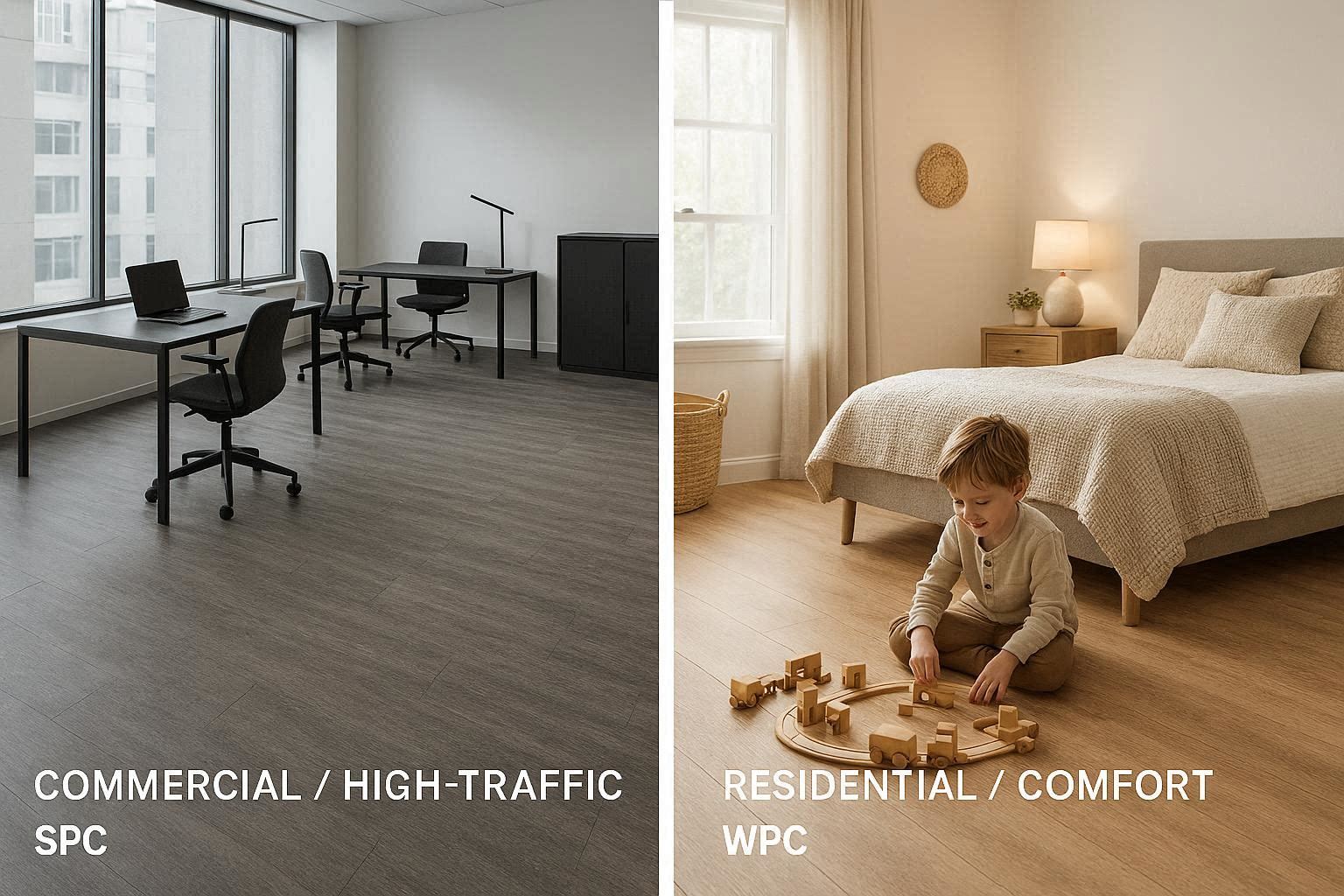
Best for commercial applications
More temperature stable
Thinner profile for easier transitions
Generally more affordable
SPC Disadvantages
Harder underfoot, less comfortable
Can feel cold without underlayment
Transmits more sound
What is WPC Flooring?
WPC flooring has a foamed core that provides cushioning:
Composition: Wood flour, PVC, plasticizers, foaming agents
Thickness: Typically 5-8mm total
Density: Less dense due to foam structure
WPC Advantages
Warmer and softer underfoot
Better sound absorption
More comfortable for standing
Often feels more premium
WPC Disadvantages
Can dent from heavy furniture
Less temperature stable in unconditioned spaces
Usually costs more than SPC
Quick Comparison Chart
| Feature | SPC | WPC |
|---|---|---|
| Durability | Higher | Good |
| Comfort | Moderate | Excellent |
| Sound | Louder | Quieter |
| Dent Resistance | Excellent | Good |
| Price | $2-5/sf | $3-7/sf |
Which Should You Choose?
Choose SPC for: Basements, commercial spaces, rental properties, areas with heavy furniture, budget projects
Choose WPC for: Living rooms, bedrooms, areas where you stand for long periods, multi-story homes where sound matters
The Bottom Line
Both SPC and WPC are excellent waterproof flooring choices. Your decision should be based on comfort preferences, budget, and specific room requirements.
